Everyone, everywhere, together
WaterAid Nigeria
Country Programme Strategy 2023-2028
WaterAid Nigeria’s overall goal is to influence, deliver and scale-up WASH solutions that are sustainable, climate-resilient, gender-responsive and address key cross-cutting elements of other development goals including health, education, poverty, economic growth, and nutrition.
By 2028, our ambition is to reach 10,000,000 people directly through our interventions with basic WASH services and behaviours. Working collaboratively with the government of Nigeria and other key partners in development, media, academia, private sector, and civil society space, we further seek to influence improved basic WASH access for 17,000,000 more people.
Safe, inclusive and sustainable WASH is not only key to achieving a full and healthy life, but it also underpins the realisation of national, socio-economic development. WASH enhances citizens ability to maximise their potentials and realise their rights. That millions are currently denied access to these three essentials is a national crisis that compromises their health, disempowers and impoverishes them.
In the past 27 years, WaterAid Nigeria has been working towards the day when everyone in the country has access to sustainable and safe WASH services. Whilst some progress has been made, facilitated by political will at the federal level, it is necessary to support the development of a strong enabling environment to create the nationwide impact required. Our new strategy, bolder and more ambitious than the last, lays out our blueprint for maximising the emerging opportunities through systemic change and accelerating impact over the next five years.
We are committed to the full implementation of this strategy to achieve the objectives and outcomes. We call on the government, donors, media, private sector and other partners to join us in creating and delivering a monumental shift that will transform water, sanitation and hygiene services for entire communities and towns and unlock better futures for everyone, everywhere in Nigeria.
Our CPS at a glance:
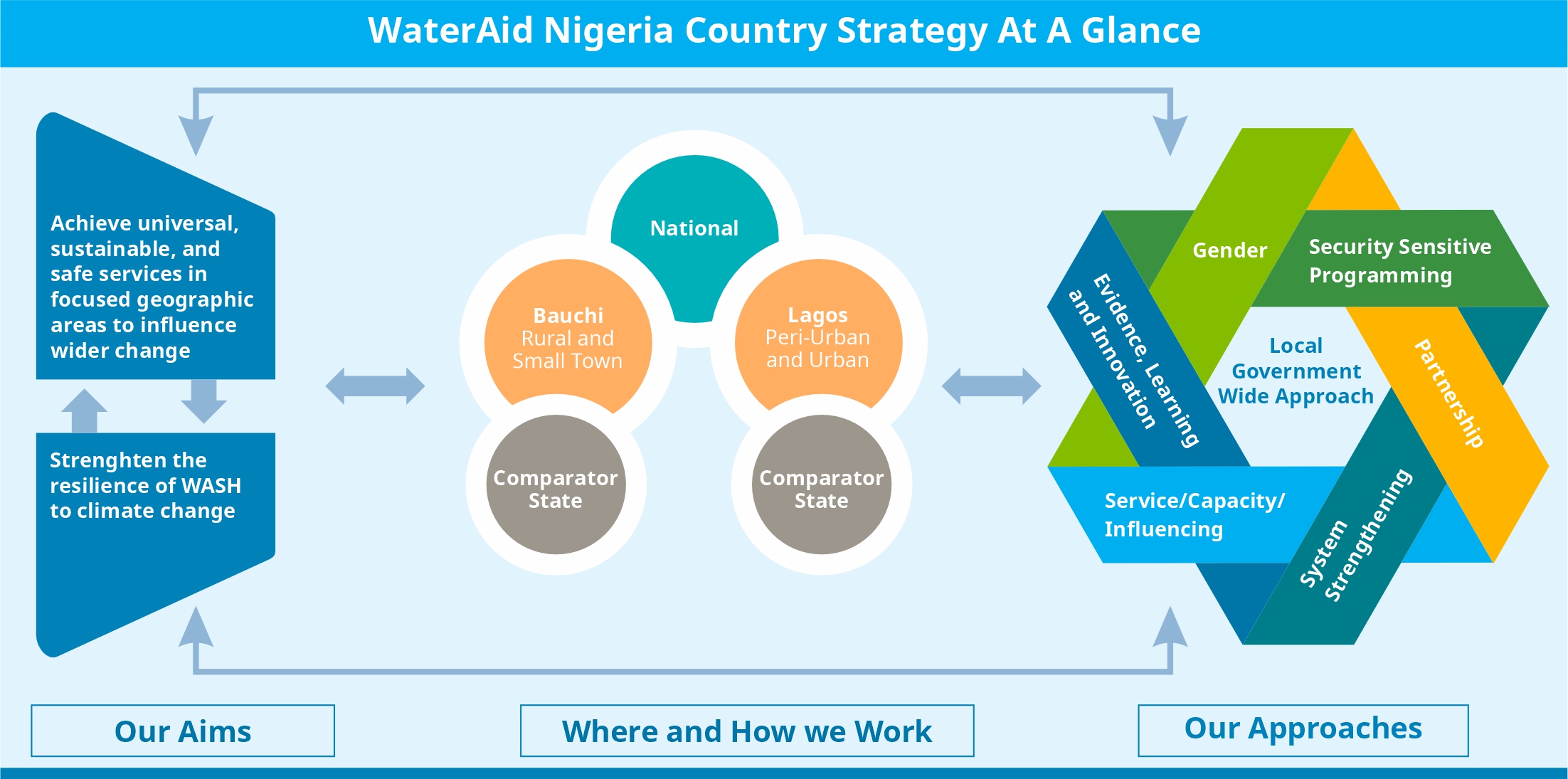
Change is possible and the time for change is now!
3 in 10
people in Nigeria don't have clean water close to home.

3 in 5
people in Nigeria don't have a toilet of their own.

4 in 5
people in Nigeria lack handwashing facilities at home.

Since we started working in Nigeria in 1995, we have been working closely with the government and partners to expand access to water, sanitation and hygiene.
Get involved, your way
There are lots of ways to help us reach everyone, everywhere with clean water, decent toilets and good hygiene.


Volunteer for us
Become a WASH champion and advocate for increased access to water and sanitation services.

Join our campaigns
Together, we can use the media and other accountability platforms to hold government accountable to commitments to prioritise WASH.

Work with us
Become a WaterAider, and join an international community changing the lives of the most marginalised in Nigeria.